
Book of Knowledge · Category V, Chapter 3 · 1206
The cow that does no work: al-Jazarī's hidden water engine
A wooden cow walks round and round a copper disc, and a great wheel of painted jars lifts water from a garden pool. But her hooves never touch the disc. In 1206 al-Jazarī hid the real engine underground. Explore it in interactive 3D, then watch the film.
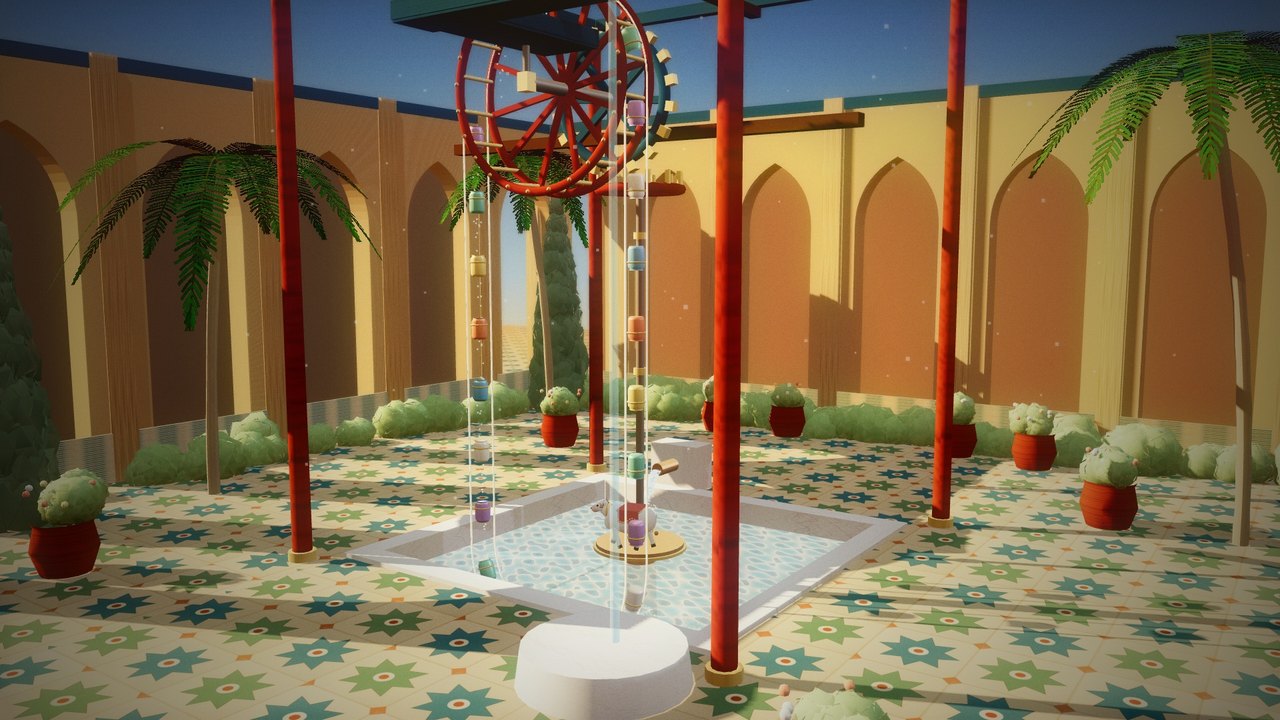
A machine meant to be seen
Chapter 3 of the water-raising machines in al-Jazarī's Book of Knowledge of Ingenious Mechanical Devices describes a garden pool with a machine standing in it. A wooden cow walks around a copper disc. She turns a toothed wheel, the toothed wheel turns a great wheel hung with jars, and the jars lift water out of the pool into a channel.
Beautiful to behold.al-Jazarī, on the silken ropes and jars painted in many colours
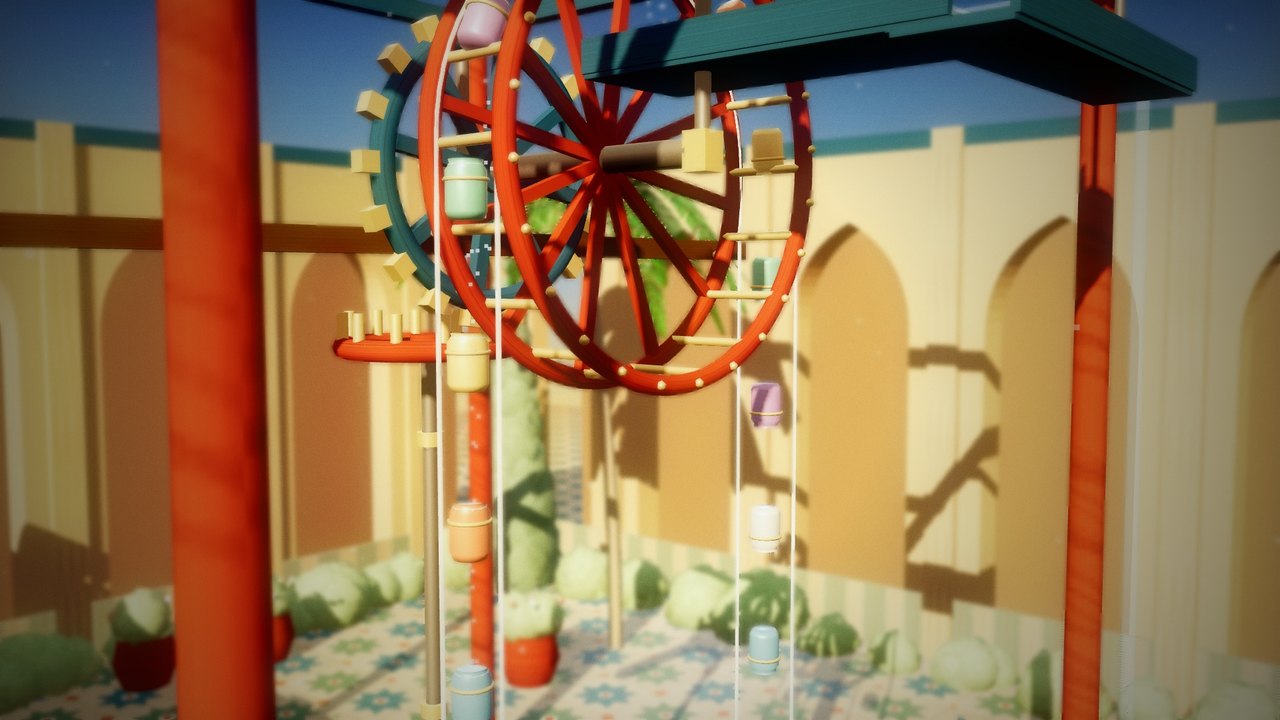
What is a saqiya?
A saqiya is an endless chain of pots. Two ropes and dozens of jars are looped over a wheel. Each jar dips into the water, climbs out full and tips over the top, pouring into a channel. Machines like this have lifted water for more than two thousand years, and usually a real ox, donkey or camel does the pulling, walking in a circle to turn a pair of gears.
In al-Jazarī's garden, there is no real ox.
The clues
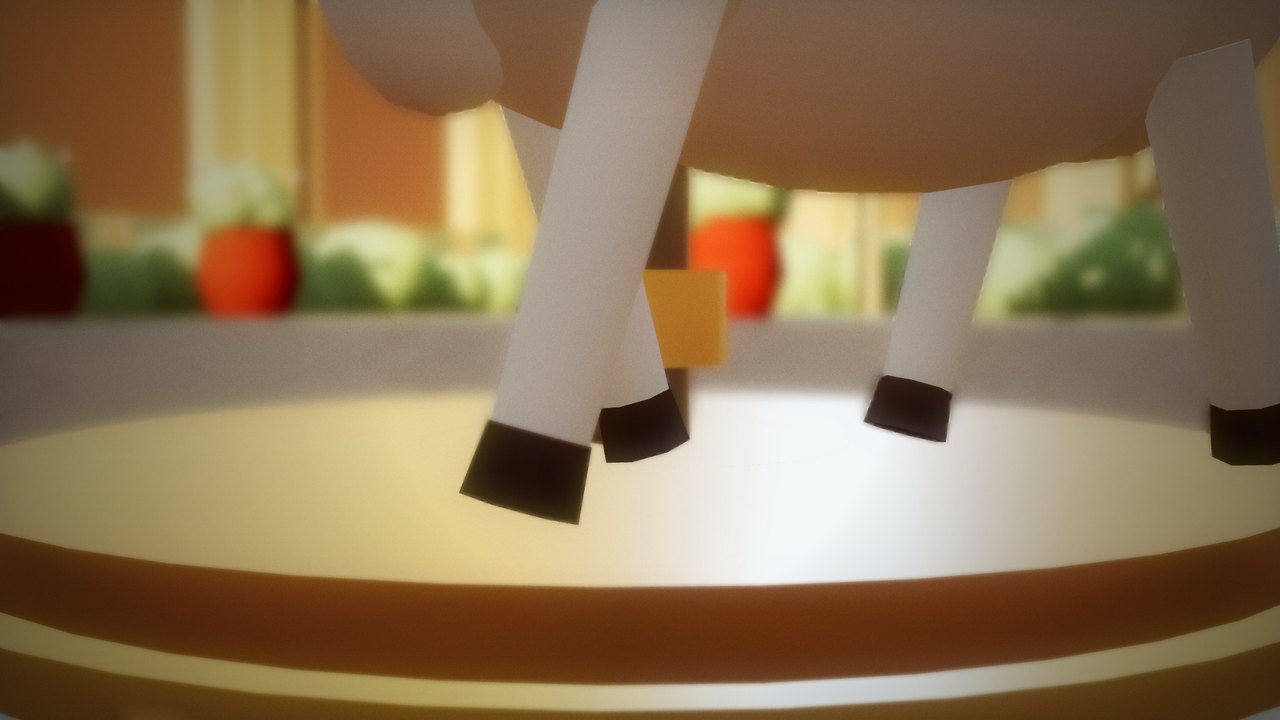
- The cow is hollow, made as light as possible. She hangs from a lever, a barleycorn's width above the disc, so her hooves never touch it.
- The pillar beneath her is hollow.
- Water keeps pouring into the pool, and keeps draining away.
The hidden chamber
Eight spans beneath the floor there is a hidden chamber. The water leaving the pool falls onto a scoop-wheel, seven spans across, and drives it round and round. On its axle, a gear turns a second gear fixed to the foot of an iron shaft twelve spans long. The shaft rises through the hollow pillar and carries the lever, and the cow simply comes along for the ride. At the top, two more gears turn the wheel of jars.
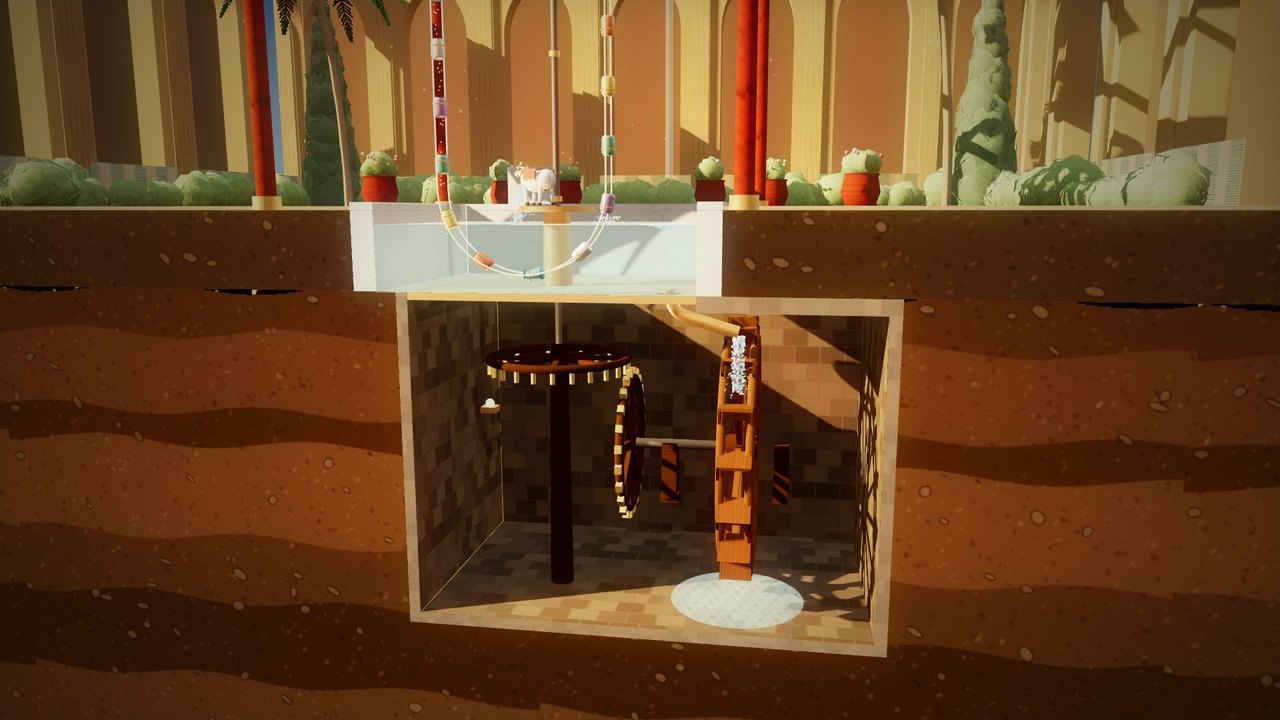
It is not perpetual motion. Fresh water keeps flowing into the pool from outside; the energy comes from water falling into the chamber below, and the jars lift only part of it back up. The trick is that the engine is out of sight.
Quick test: which way does the cow walk?
The scoop-wheel turns so that the falling water pushes its scoops down. Follow the teeth through the gear at the foot of the shaft: which way does the cow walk, seen from above?
Show the answer
In our reconstruction she walks clockwise, seen from above.
Why hide the engine?
Al-Jazarī says this installation had two machines. One did the plain work of raising water higher than the pool. This one was built to be beautiful. It is not large: the frame stands about eleven spans, under three metres, and each jar holds about thirty dirhams of water, a small cupful. But a cow that never tires, never eats and never stops is engineering with a little bit of magic.
Saqiyas today
Saqiyas still turn today, in Egypt and in India, where the chain-of-pots wheel is often called the Persian wheel. In Damascus, water-raising wheels have watered gardens since al-Jazarī's own century. As for hiding the engine: we still do it, in every machine that seems to move all by itself.
Watch the film
0:00The cow that never touches the ground0:16Title0:21A garden machine, meant to be seen0:45What is a saqiya?1:002,000 years of saqiyas1:08No real ox1:11The clues1:31The hidden chamber2:05Quick test: which way?2:20Why hide the engine?2:50Saqiyas still turning3:08A cow that does no work3:18More machines
Questions & answers
What is a saqiya?
A saqiya (Arabic sāqiya) is a water-raising machine with an endless chain of pots: two ropes carry dozens of jars over a wheel, each jar dipping into the water, rising full and tipping its water out at the top. Usually an ox, donkey or camel walking in a circle turns it through a pair of gears. Machines of this kind have lifted water for more than two thousand years and are still used in places such as Egypt and India.
Does the wooden cow really do no work?
Yes. In al-Jazarī's Chapter 3 machine the cow is a hollow wooden figure, made as light as possible, hung from a lever on the turning shaft so that she rides a barleycorn's width above the disc. Her feet never touch it. The shaft carries her round; she only looks as if she is pulling.
What actually drives the machine?
Water. The pool drains into a hidden chamber some eight spans below the floor, where it falls onto a scoop-wheel about seven spans across. A gear on the scoop-wheel's axle turns a gear at the foot of an iron shaft about twelve spans long. The shaft rises through the hollow pillar under the cow and, at the top, two more gears turn the wheel of jars.
Is "the water lifts itself" perpetual motion?
No. Water keeps flowing into the pool from outside and draining out of it. The energy comes from that water falling into the chamber below; the jars lift only part of the pool's water up into the channel. The trick is that the engine is hidden, not that it is free.
Why did al-Jazari hide the engine?
He says the installation had two machines: one did the plain work of raising water higher than the pool, and this one was made to be beautiful to behold, with silken ropes and jars painted in many colours. Hiding the engine turns a working saqiya into a small marvel: a cow that never tires, never eats and never stops.
How big was it?
It is not large. Al-Jazarī gives the frame as about eleven spans, under three metres, and each jar holds about thirty dirhams of water, roughly a small cupful. Sizes in our 3D reconstruction are approximate.
Which way does the cow walk?
Follow the gears from the scoop-wheel up to the cow and, in this reconstruction, she walks clockwise seen from above. The film pauses on this as a quick test before giving the answer.
Sources
- Ibn al-Razzāz al-Jazarī, Kitāb fī maʿrifat al-ḥiyal al-handasiyya (The Book of Knowledge of Ingenious Mechanical Devices), 1206, Category V, Chapter 3. English translation: Donald R. Hill, 1974.
- Background: Ismail al-Jazari, Sakia (saqiya).
- The 3D model is a reconstruction from al-Jazarī's text; sizes and speeds are illustrative.
Fifty machines, one master engineer
More of al-Jazarī's machines are on the way
Subscribe to follow each one as it is rebuilt and animated.